
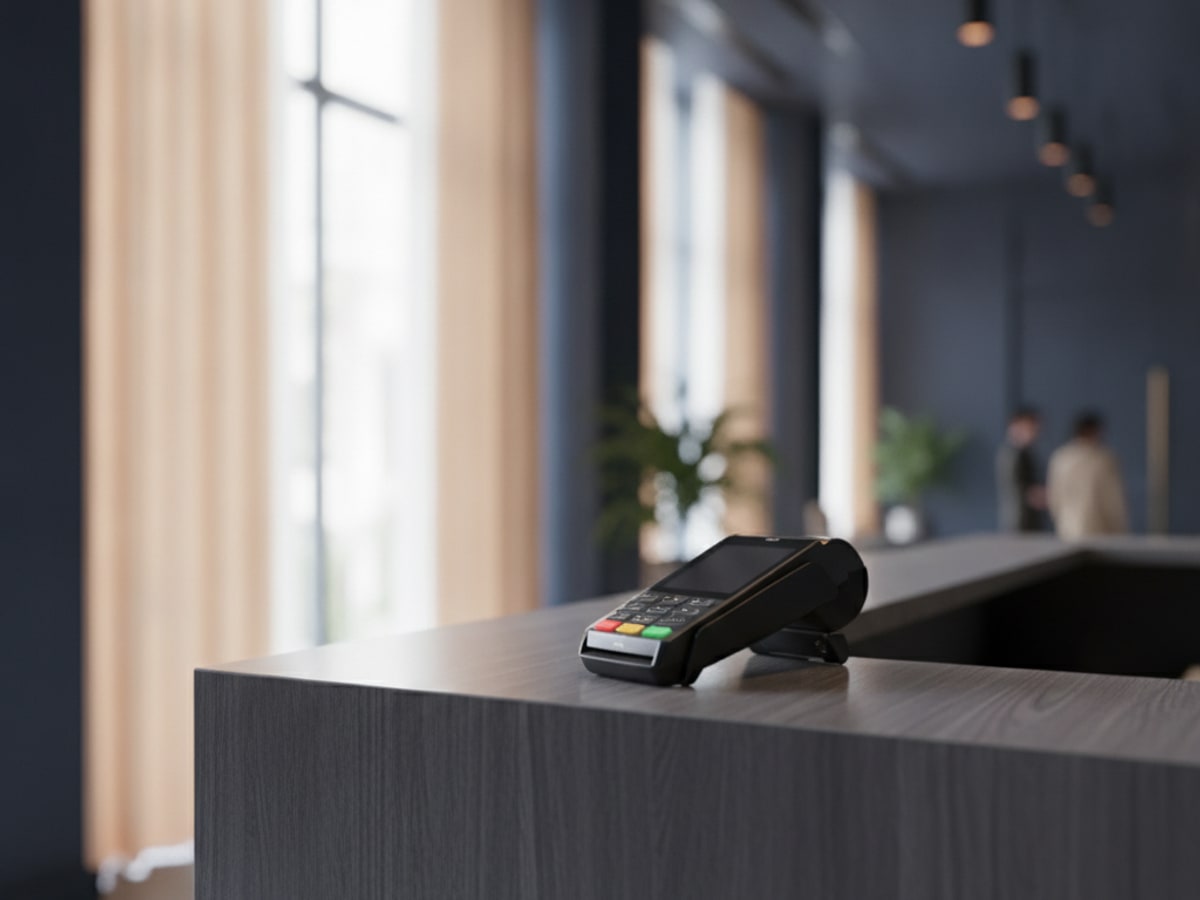
Collection rates fall sharply once the patient leaves the building, so the estimate and the script matter far more than the follow-up process does. The awkwardness people fear comes almost entirely from asking for a number the patient has not heard before.
The difference between collecting at the desk and collecting by statement is not small. It is the single largest lever most practices have over patient revenue, and it is mostly a conversation problem.
Why it is avoided
Front desk staff are asked to do something that feels adversarial, usually without a script, often without a reliable number, and always while the patient is standing in front of them. Avoidance is a rational response to being under-equipped.
What makes it work
A number they trust. Staff will not ask confidently for an amount they suspect is wrong. That means real benefits verification, not an eligibility check.
A script. Neutral and specific: "Based on your plan, today's visit is expected to be $42. Would you like to pay by card?" It is an expectation, stated calmly, with a method attached.
Timing. At check-in, before the visit. After the appointment the patient is leaving, distracted, and the moment is gone.
A fallback. If they cannot pay today, the answer is a payment plan offered immediately, not a statement in three weeks.
Where estimates go wrong
An estimate that is frequently too high destroys trust and creates refunds. One that is too low undercollects and produces a surprise. Both come from estimating off an eligibility check rather than a benefits verification — which is why the front-end work upstream of this conversation determines whether the conversation is possible at all.
Give staff a script and permission
Front desk staff avoid asking because nobody told them what to say or what to do when a patient pushes back. Both are solvable with a half-page script: the sentence that states the amount, the sentence that offers a plan, and the rule for when to stop pressing.
Permission matters as much as wording. Staff who fear a complaint will not ask, and a practice that has not said "this is your job and we will back you" has effectively told them not to.
Where estimates go wrong
Applying the charge instead of the allowed amount. Ignoring an unmet deductible. Missing a secondary policy. Each produces a number the patient later discovers was wrong, and each makes the next estimate harder to collect on.
Present a range where the service is genuinely uncertain, and say so. Patients accept uncertainty far better than they accept a confident figure that turns out to be wrong.
Measure it
Point-of-service collections as a share of total patient revenue, tracked monthly by location. It is one of the few billing metrics a front desk can directly move, and publishing it changes behavior faster than any training session.
Train for the second sentence
Most staff manage the first sentence — stating the amount. What defeats them is the reply: the patient says they cannot pay today, or disputes the figure, or asks why insurance is not covering it.
Script those three responses specifically. A confident answer to the pushback is what separates a policy that works from one that exists on paper.
Measure by location and by person
Point-of-service collection varies enormously between individuals doing the same job with the same script. Reporting it at the practice level hides that entirely.
Publishing it by location, and reviewing it individually, moves the number faster than any amount of process change.
Common questions
- How do I ask patients for payment without being awkward?
- State the amount as an expectation rather than a question, and make sure it is a number the patient already heard at scheduling. Surprise is what creates the awkwardness.
- How much more do I collect at the visit than afterwards?
- Substantially more. Collection rates drop once the patient leaves and drop again as the balance ages, which is why point-of-service collection is the highest-leverage change available.
- What if the patient cannot pay at the visit?
- Offer a short written plan with autopay on the spot. A plan agreed at the visit performs far better than one negotiated after a balance has aged.
- How do I estimate what the patient owes?
- Use eligibility data for the deductible and accumulators, applied to your contracted rate — not your charge. An estimate based on charges will overstate and erode trust.
- Should I collect before or after the visit?
- Before, for anything predictable. After the visit the patient is leaving, distracted, and far less likely to complete a payment.
Denials Piling Up?
We handle the revenue cycle end to end — coding by certified coders, claim submission, denial management and appeals, and A/R follow-up, with six reported numbers every month.